
Corporate Branding Strategy: Building a Company Brand That Wins Enterprise Trust
Corporate branding is the deliberate management of what a market believes about you before it engages. Design governs a fraction of that; the rest is an operating question.
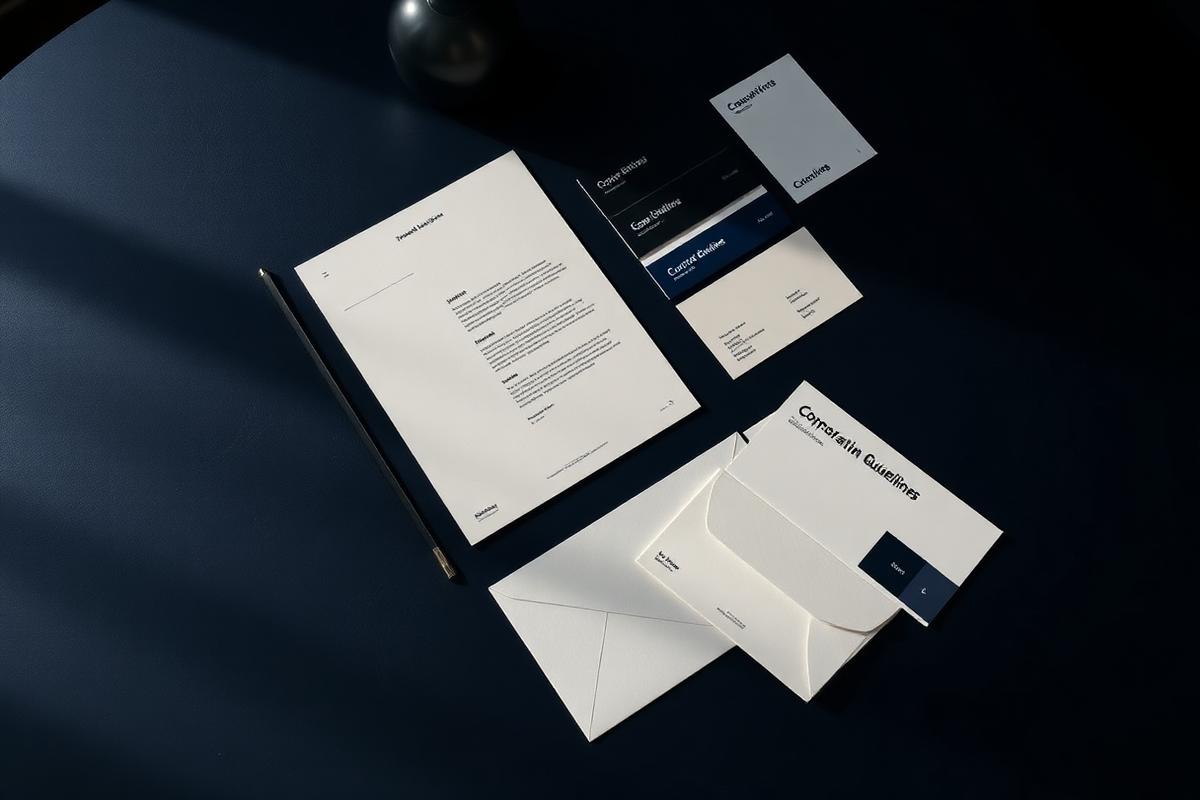
Corporate branding is an operating decision, not a design project
Most corporate branding programmes are commissioned as design exercises and judged as design outputs — a new mark, a palette, a typeface, a set of templates. Twelve months later the market's perception of the company is unchanged, because nothing about how the company behaves, communicates, or sells was altered.
Corporate branding, done seriously, is the deliberate management of what a market believes about an organisation before it engages. It is built from three inputs: what you consistently say, what you consistently do, and what other credible people say about you. Design governs the first, weakly. The other two are operating questions.
What a corporate brand actually has to do
For an enterprise buyer, a corporate brand performs four jobs:
- Reduce perceived risk. In high-value B2B purchases, the buyer's dominant private question is "will I be criticised for choosing this firm?" Brand is the accumulated evidence that they will not.
- Compress evaluation time. A clear brand tells a prospect within thirty seconds whether you are plausible for their problem. An unclear one forces work most buyers will not do.
- Create pricing latitude. Two firms with identical capability but different perceived standing do not command the same fee. That gap is brand equity, and it is measurable.
- Attract talent and partners. In advisory and services businesses, the brand recruits before the recruiter does.
Any branding investment that cannot be traced to one of these four is decoration.
The architecture: five layers, in order
1. Positioning
The single most consequential and most avoided decision. Positioning is a statement of who you are for, what you do better than the credible alternatives, and — critically — who you are not for.
A useful test: would a serious competitor disagree with your positioning statement? If every firm in your category could sign it, you do not have a position; you have a description.
Positioning must be earned by capability. A claim the delivery organisation cannot honour creates a brand liability that surfaces in the second year of every client relationship.
2. Brand architecture
How the corporate brand relates to sub-brands, practices, products and acquired entities. Three broad models:
- Monolithic (branded house). Everything carries the corporate name. Maximum equity concentration, minimum flexibility. Standard for professional services and advisory firms.
- Endorsed. Sub-brands with visible corporate backing. Useful where an acquired brand carries market-specific equity worth retaining.
- House of brands. Independent identities. Rarely appropriate in B2B services; it fragments the trust you are trying to accumulate.
Architecture decisions are expensive to reverse. Make them explicitly, at board level, before a design process begins.
3. Narrative and messaging system
Beneath the positioning sits a messaging hierarchy: the corporate narrative, three to five proof-carrying pillars, audience-specific variants for each buyer persona, and objection-handling language for the concerns that actually arise in procurement.
The failure mode here is a messaging document nobody uses. Messaging that does not appear verbatim in proposals, sales conversations, and executive presentations is not a messaging system; it is a workshop artefact.
4. Verbal and visual identity
Naming, tone of voice, logotype, typography, colour, photography direction, layout system, and the templates through which 90% of brand exposure is actually delivered — proposals, decks, reports, LinkedIn posts, event stands.
Practical guidance: invest disproportionately in the artefacts your firm produces most often. A superb annual report and a poor proposal template is a common and costly inversion of priorities.
5. Proof system
The layer most branding programmes omit entirely. Proof is what converts claim into belief: client outcomes, named references, published research, credentialled speakers, third-party recognition, and the visible track record of the leadership team. Build the proof pipeline as a permanent function, not as a launch campaign.
Rebranding: when it is justified and when it is vanity
Legitimate triggers include a genuine change of strategy or addressable market, a merger creating incompatible identities, a name that is legally or culturally unusable in target markets, or a market position that has demonstrably shifted beneath an unchanged identity.
Illegitimate triggers: a new marketing leader, boredom internally, or a competitor's refresh. Internal fatigue with a brand almost always precedes market fatigue by several years.
When rebranding is justified, sequence it: strategy and positioning first, architecture second, identity third, rollout fourth. Programmes that begin with identity almost invariably return to positioning halfway through, at cost.
Implementation: where corporate branding programmes fail
No single owner with authority. Brand governed by committee converges on the least objectionable option, which is by definition the least distinctive.
Launch without adoption. Guidelines published, templates unbuilt, teams unsupported. Within two quarters, local variants proliferate and consistency collapses.
Ignoring the employee layer. In services businesses, employees are the primary brand channel. If the people in client meetings cannot articulate the positioning in their own words, the brand does not exist outside the marketing function.
Global identity, no local translation. Colour, imagery, naming and tone carry different meanings across markets. Global consistency of position, local sensitivity of expression — the reverse of what most rollouts do.
No measurement baseline. Without a pre-programme measurement of awareness, association and consideration, the investment cannot be defended at the next budget cycle.
Measuring corporate brand
Credible measures in a B2B context:
- Prompted and unprompted awareness within the defined target account universe — not the general market.
- Association strength on the two or three attributes your positioning claims.
- Inclusion rate: proportion of relevant RFPs and shortlists you are invited into. The cleanest commercial proxy for brand strength in enterprise B2B.
- Branded search volume and direct traffic trend.
- Win rate at equal capability, and average fee level versus comparable competitors.
- Sales cycle length, which shortens measurably as brand trust rises.
Measure annually against a baseline, and accept that brand is a slow variable. Reading it quarterly produces noise and bad decisions.
The governance layer
Sustaining a corporate brand requires an owner, a standards regime, a review point for major market-facing assets, and a periodic audit of what the market actually experiences — the website, the proposals, the event presence, the search results, the third-party commentary.
Across 500+ international projects and events, delivered with stakeholders in more than 50 countries for Fortune 500 organisations, government ministries and UN agencies, the organisations with the strongest corporate brands are rarely those with the largest brand budgets. They are those where a small number of clear claims are relentlessly and consistently proven, in every artefact, by every person, over a long period.