
Electronic Media in B2B Marketing: Television, Radio, CTV and Podcasts That Build Standing
Electronic media does something targeted digital cannot: it creates public, shared knowledge — and in enterprise buying, public standing is what makes a choice defensible.
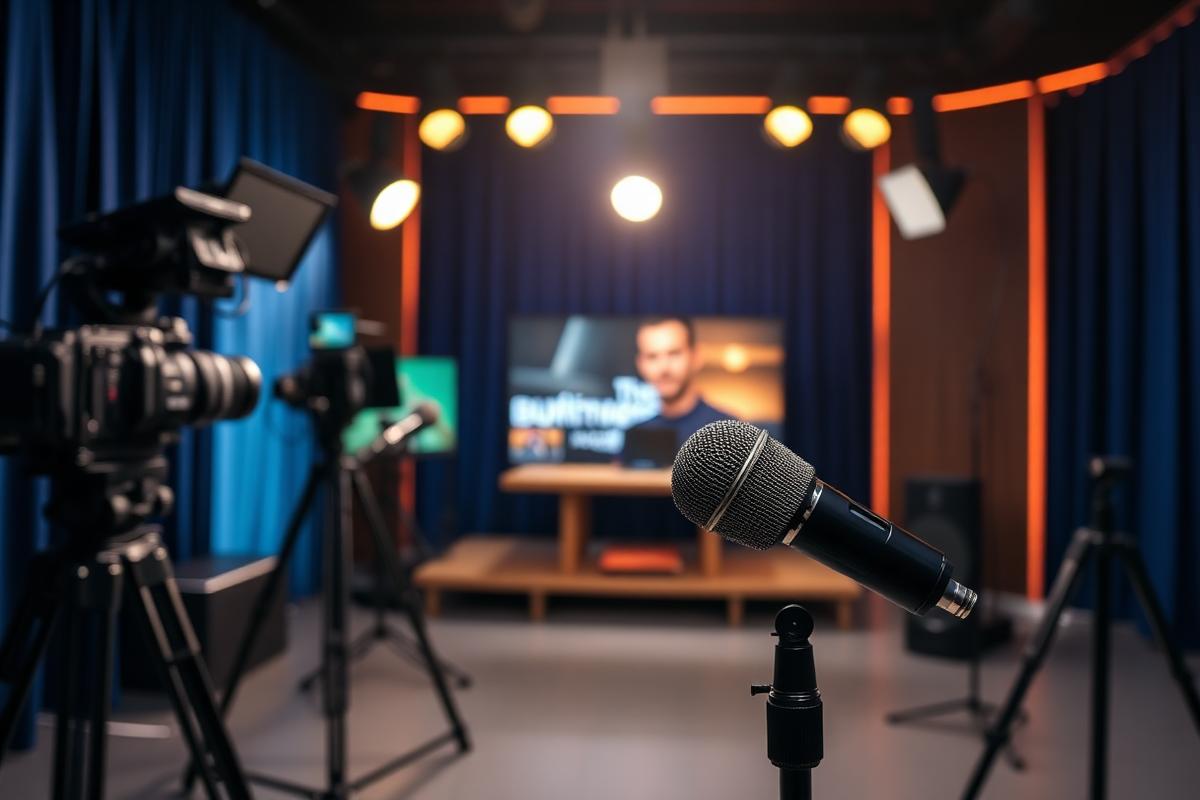
The channel that most B2B marketers have written off
Electronic media — television, radio, streaming video, connected TV, podcasts, and digital audio — is routinely dismissed in enterprise B2B as too broad and too expensive. That dismissal is usually correct about the media buy and wrong about the strategy.
Broadcast and audio media do something no targeted digital channel can: they create shared, public knowledge. A targeted advertisement tells one person about you privately. A visible presence on a business channel or a widely heard podcast tells a market about you publicly, and — critically — tells each viewer that others have seen it too. In enterprise purchasing, where the buyer's private fear is being criticised for an unfamiliar choice, that public quality is the entire point.
When electronic media earns its place in a B2B plan
It is justified in five situations:
- Category creation. You are selling something the market does not yet have a budget line for, and the education burden is too large for search alone.
- Credibility asymmetry. You are technically strong but institutionally unknown relative to incumbents. Broadcast presence closes a standing gap faster than content volume.
- Concentrated markets with visible executives. Where your buyers are a few thousand senior people who consume identifiable business media, "broad" is not actually broad.
- Regulatory, policy or public-affairs audiences. Ministries, regulators, multilateral bodies and their advisors are reached through public media far more reliably than through performance channels.
- Event and market-entry amplification. A summit, a market launch, or a major research release gains disproportionate weight when it carries broadcast validation.
It is not justified when the objective is short-term lead capture, when the addressable market is a few hundred named accounts, or when the organisation cannot sustain presence for at least three to four quarters.
The formats, and what each is good for
Broadcast and business television
Earned appearances — commentary, panel participation, interviews on business news programming — remain among the highest-trust assets available to a services firm. They are unbought credibility, and they travel: a three-minute segment becomes a website asset, a proposal exhibit, a social clip and a conference introduction for years afterwards.
Paid broadcast in business dayparts works for category-level messaging and institutional positioning. Judge it on awareness and inclusion rate, never on direct response.
Sponsored programming and documentary formats allow depth that spot advertising cannot, and align naturally with research-led firms. They require genuine editorial substance; thinly disguised advertising is recognised immediately by exactly the audience you want.
Connected TV and streaming
CTV has quietly resolved the historical objection to television in B2B: it can now be targeted to defined account lists and professional segments while retaining the credibility of a full-screen, sound-on, non-skippable format. For firms with a defined target-account universe, CTV is frequently the most under-priced credibility channel currently available.
Practical guidance: use CTV for the same message you would run on broadcast, not for a repurposed performance advert. The format's advantage is attention, and attention rewards production quality.
Radio and digital audio
Business radio retains strong reach among senior decision-makers during commute and travel windows in many markets, including much of Asia, the Gulf and Europe. Digital audio adds targeting and measurability.
Audio is a frequency medium. A short, repeated, single-idea message across a sustained flight outperforms a complex message run briefly.
Podcasts
The most efficient electronic channel in B2B today, in three modes:
- Guest appearances on established industry podcasts. Low cost, high credibility, long shelf life, and excellent search visibility for the named expert.
- Host-read sponsorship of shows whose audience maps to your buyers. Trust transfers from host to sponsor in a way display advertising cannot replicate.
- Owned programming. Justified only with a sustainable cadence and genuine access to guests your audience cannot hear elsewhere. An owned podcast is a publishing commitment, not a campaign.
Webinars and streamed events
The bridge between electronic media and direct demand. A well-run streamed executive briefing produces both reach and identified, qualified engagement — and unlike broadcast, it generates first-party data.
Building the earned-media engine
Paid electronic media is a purchase; earned electronic media is a capability. Building it:
- Designate and prepare spokespeople. Producers book people, not organisations. One or two credentialled, media-trained executives with clear subject territory will out-perform a large communications budget.
- Own a specific territory. "Global business" is not a territory. "Cross-border programme delivery in emerging markets" is. Producers call the person known for something narrow and current.
- Be fast and available. News-cycle responsiveness is the single largest determinant of repeat bookings.
- Prepare the substance, not the script. Three sharp, evidenced points delivered conversationally beat a rehearsed message every time.
- Instrument the aftermath. Every appearance should have a landing destination, a clipped asset, a social distribution plan, and a place in the proposal library. Most firms lose the majority of the value of earned media by failing to redeploy it.
Integration with the rest of the plan
Electronic media should never be run as a standalone line. The pattern that works:
- Electronic media builds recognition and public standing.
- Search and content capture the resulting self-directed research. Broadcast exposure produces measurable lifts in branded search — if the destination content is ready.
- Account-based digital sustains familiarity with the named buying committee between broadcast flights.
- Sales converts, carrying the broadcast asset as third-party evidence.
The failure mode is running a broadcast flight without the digital destination prepared, then attributing the absent response to the medium.
Measurement
Electronic media cannot be measured with click metrics, but it is not unmeasurable:
- Branded search volume and direct traffic lift during and after flights, versus a pre-flight baseline.
- Geographic or market holdout tests — the most credible causal evidence available.
- Awareness and association tracking within the target account universe, measured annually.
- RFP inclusion rate trend, the strongest commercial proxy in enterprise B2B.
- Earned-media inventory: number and quality of appearances, and their downstream use in proposals and pitches.
- Sales-cycle length, which contracts as institutional familiarity rises.
Set the measurement framework before the buy, and agree with the board in advance which metrics will constitute success. Retrofitting expectations onto broadcast results is how good programmes get cancelled.
Practical budget guidance
For most enterprise B2B firms, electronic media should be a minority of the marketing budget — typically 15% to 30% — concentrated into fewer, deeper commitments rather than spread thinly. Frequency within a defined audience beats reach across an undefined one. And a sustained twelve-month presence at moderate weight will nearly always outperform a heavy six-week burst.
Across 500+ international projects and events delivered with stakeholders in more than 50 countries — for Fortune 500 organisations, government ministries and UN agencies — the firms that convert electronic media into commercial advantage are those that treat it as an institutional standing investment with a long horizon, and that build the earned-media capability rather than only buying the paid one.