
The Sales Kickoff Agenda That Earns Its Budget
Before any agenda drafting, answer one question: what will sellers do differently on the Monday after? Name three behaviours, then cut every session that doesn't serve one.
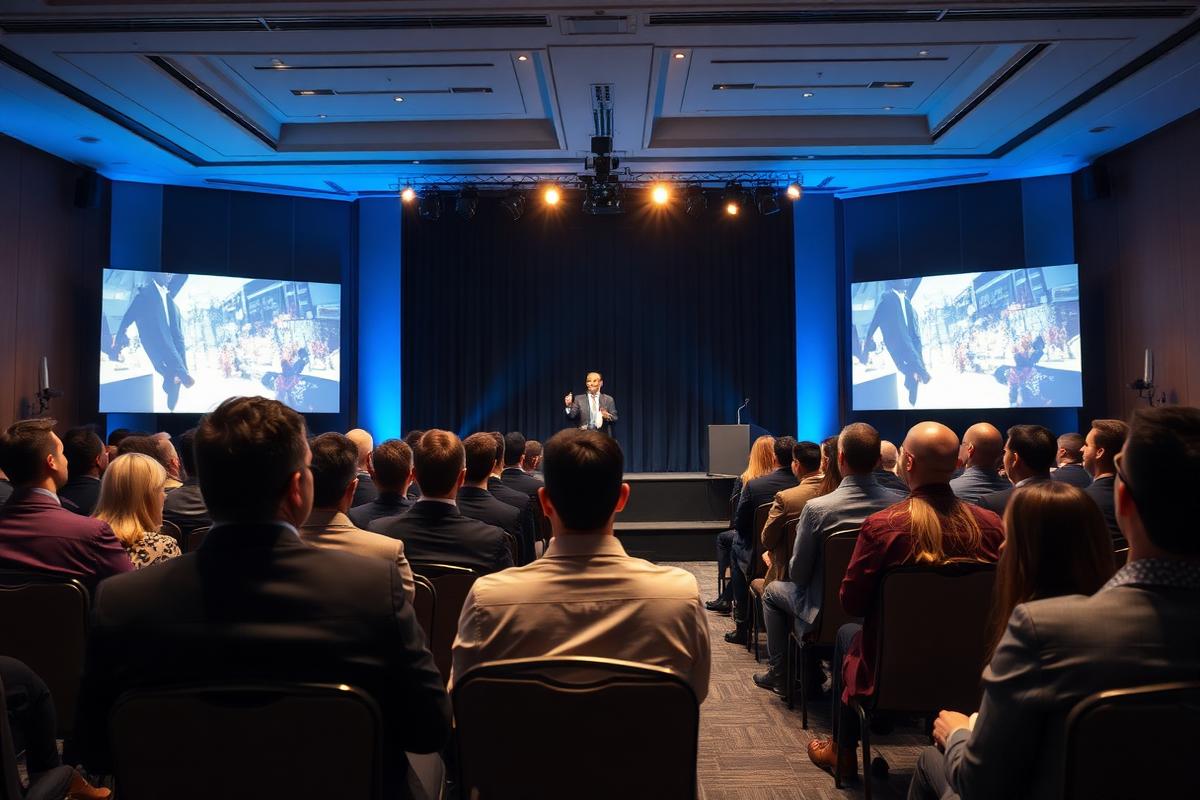
A sales kickoff agenda earns its budget when every hour on it is tied to a behaviour you need changed in the next quarter. Most agendas are built the other way round: available slots are filled with functions who want stage time, and the result is a well-produced week that leaves seller behaviour exactly where it was.
A sales kickoff is usually the single largest discretionary line in a go-to-market budget and the least rigorously evaluated. That combination is worth fixing, because the event has genuine leverage — it is the one moment a distributed revenue organisation is in the same room with permission to change how it works.
Start from three behaviours, not a theme
Before any agenda drafting, leadership should answer one question: what will sellers do differently on the Monday after? Write down three behaviours. Not five, not ten. For example:
- Lead discovery with the operating problem instead of the product
- Bring the economic buyer into the deal before proposal stage
- Position against a specific competitor using a specific proof point
Every session on the agenda must then justify itself against one of those three. Sessions that cannot are cut, moved to a pre-read, or handled asynchronously. This single rule removes roughly a third of a typical agenda and improves the rest.
A working structure
Pre-work (two weeks out). Numbers, strategy updates, and product roadmap are circulated in advance as short recorded briefings with a required acknowledgement. Do not spend live room time transmitting information that could be read. This is the highest-value structural change most organisations can make.
Day one, morning — the argument. A short, honest business context: where we won, where we lost, and why. Losses discussed openly buy more credibility with a sales floor than any motivational segment. Then the three behaviours, stated plainly by the CRO, with the reasoning behind each.
Day one, afternoon — the practice. Live deal clinics, not presentations. Real accounts, real reps, in small groups, working the new plays with managers facilitating. Sellers learn by rehearsing, and the room's energy comes from doing rather than watching.
Day one, evening — the deliberate networking. Structure it. Seat cross-region, seat sellers with solution engineers and delivery leads they will need next quarter. Unstructured social time produces the same clusters that already exist.
Day two, morning — the customer voice. A real customer on stage, interviewed rather than presenting, describing how they actually bought and what nearly stopped them. This is consistently the highest-rated and most behaviour-changing hour of any kickoff, and it is frequently missing.
Day two, midday — certification. Each rep demonstrates one play to a manager before leaving. It converts the event from exposure to competence and gives managers a baseline to coach against.
Day two, close — commitment and cadence. Each rep leaves with three named accounts where they will apply the plays, and a date in their manager's calendar to review them. The event ends by handing off to the weekly rhythm.
What to cut
Long functional updates. Marketing, product, and operations each want thirty minutes. Give them a pre-read and a five-minute clinic slot instead.
Award ceremonies stretched across the agenda. Recognition matters; give it a defined slot and protect the rest.
The all-hands product deep dive. Product knowledge is a training problem, not an event problem, and it decays fastest of all.
Anything a rep could have read. If it is transmission, it does not belong in the room.
Measure it like a programme
An event without a measurement plan is a cost. Set the baseline before: current stage conversion, cycle time, and win rate against the target competitor. Then track at thirty, sixty, and ninety days — play adoption observed in deal reviews, movement in the specific metric each behaviour was meant to shift, and manager-reported coaching activity. Same-day satisfaction surveys measure catering, not change. The broader argument for outcome-based measurement is in how to measure event ROI.
Design and logistics serve the agenda
Room configuration determines whether a clinic works. Cabaret seating enables small-group practice; theatre seating enforces passivity. Session length should match cognitive load, not the calendar grid. And build the schedule around the reality that a global sales floor arrives jet-lagged — put the highest-value content where attention actually exists, not where tradition puts it.
We design corporate events and sales kickoffs backwards from the business outcome, which is the same discipline set out in designing events that drive outcomes.
The takeaway
Name three behaviours, cut every session that does not serve one, replace transmission with pre-reads, spend live time on practice and customer truth, certify before people leave, and measure at ninety days. That is a sales kickoff agenda that pays for itself.
If you are planning a kickoff and want it to change more than the mood, a 20-minute diagnostic will help frame the agenda. Book Executive Consultation.
TF Global Advisory Partners designs and delivers business conferences, partner summits, sales events, and exhibitions for enterprise clients — across 500+ international projects and stakeholders from more than 50 countries.